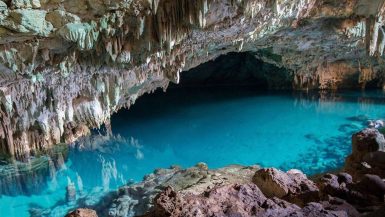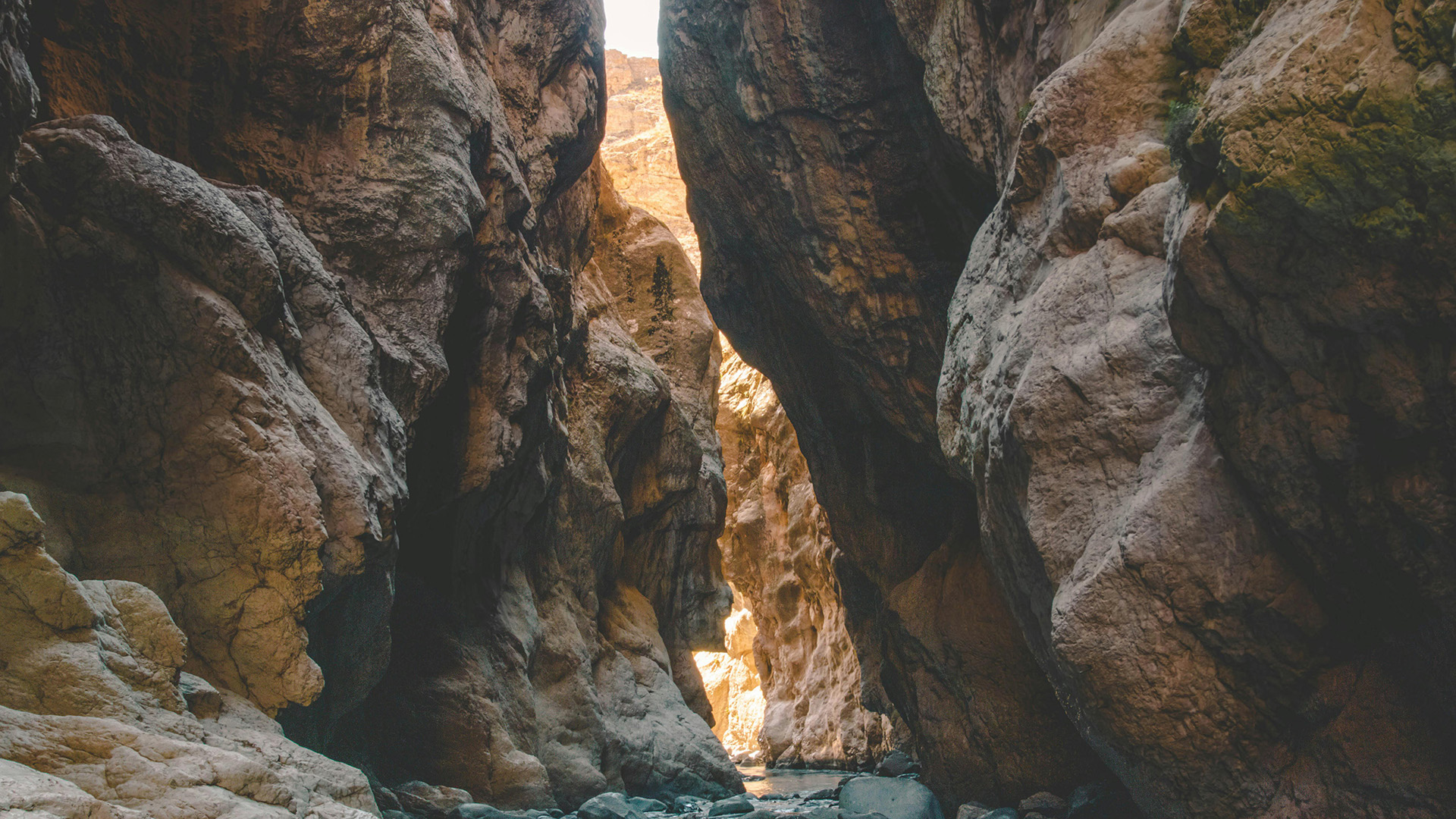
Batu Cermin Cave Labuan Bajo — locally known as Gua Batu Cermin, meaning Mirror Stone Cave — is one of the most fascinating and unusual natural attractions in eastern Indonesia. Unlike the turquoise waters and pink sand beaches that Labuan Bajo is most famous for, this remarkable limestone cave offers something entirely different: a journey underground into a cathedral of ancient rock, fossils, and natural light.
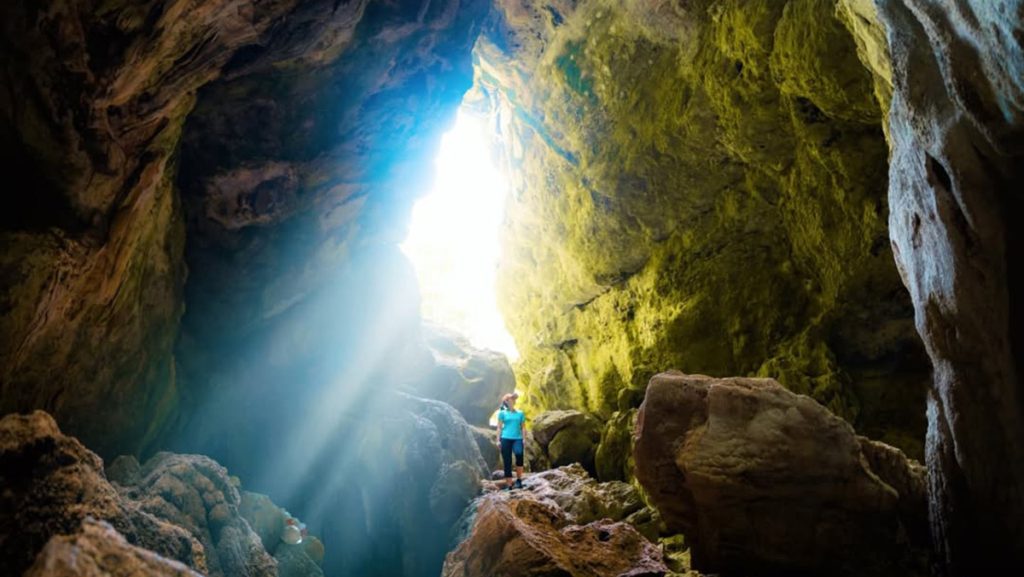
Moreover, what makes this cave truly extraordinary is its signature light phenomenon. At certain times of day, sunlight enters through gaps in the cave ceiling and strikes salt-rich walls, creating a dazzling mirror-like reflection that fills the entire chamber. As a result, no lamps or artificial lights are needed — the cave essentially illuminates itself.
In addition, Batu Cermin Cave sits just 15 minutes from central Labuan Bajo. This makes it one of the most accessible off-the-beach attractions in the area — a perfect half-day addition to any Labuan Bajo itinerary. This guide covers everything you need to know about visiting Batu Cermin Cave Labuan Bajo, from getting there and entry fees to what to expect inside.
Quick Facts: Batu Cermin Cave Labuan Bajo
Local name: Gua Batu Cermin (Mirror Stone Cave)
Location: Central Labuan Bajo, West Manggarai Regency, East Nusa Tenggara (NTT)
Cave area: Approximately 19 hectares
Distance from airport: ~15 minutes from Komodo Airport (LBJ)
Best time to visit: 9:00 am – 12:00 pm (peak light reflection)
Tour group size: Maximum 10 people per tour, 30 minutes per session
Entry fee: IDR 20,000 (domestic) / IDR 50,000 (foreign) — verify before visiting
Guide fee: IDR 20,000/person (optional but strongly recommended)
Where Is Batu Cermin Cave Labuan Bajo? Location and Access
Batu Cermin Cave sits right in the heart of Labuan Bajo town, making it one of the easiest attractions to reach in the entire region. The cave is approximately 15 minutes by road from Komodo Airport (LBJ).
Furthermore, public and private transport options make reaching the cave straightforward. Ojek (motorcycle taxis) and private car hire are both available from the airport and from town. In addition, many visitors combine Batu Cermin Cave with other half-day activities in and around Labuan Bajo — such as a visit to Rangko Cave or the Labuan Bajo waterfront.
Batu Cermin Cave Entry Fees
Entry Fee Summary: Batu Cermin Cave
Domestic tourist ticket: IDR 20,000/person
Foreign tourist ticket: IDR 50,000/person
Guide fee: IDR 20,000/person (strongly recommended)
Tour group size: Maximum 10 people per session
Tour duration: 30 minutes per session
Fees are approximate and subject to change. Confirm current rates at the ticket counter before entering.
Moreover, hiring a guide is highly recommended, even though it is optional. The guide explains the cave’s geological history, points out the fossils embedded in the walls, and ensures your safety on the narrow, low-ceilinged passages inside.
Best Time to Visit Batu Cermin Cave Labuan Bajo
The timing of your visit significantly affects the quality of your experience inside the cave.
Best Window: 9:00 am – 12:00 pm
The cave’s defining feature — its mirror-like light reflection — occurs when sunlight enters through gaps in the ceiling and strikes the salt-rich walls at the right angle. This natural light display is most vivid between 9:00 am and 12:00 pm. During this window, the cave requires no artificial lighting. Furthermore, the reflections illuminate the entire chamber with a warm, golden glow that makes photography spectacular.
However, outside this window, the light effect diminishes considerably. As a result, arriving before 10:00 am is strongly recommended to experience the cave at its most impressive.
Best Season: Year-Round
Unlike many outdoor attractions in the Labuan Bajo area, Batu Cermin Cave is accessible year-round. Because it sits inland and underground, the cave is not affected by sea conditions or rainfall in the same way as island-based destinations. Therefore, it makes an excellent option even during the wet season when boat trips may be limited.
The History and Geology of Batu Cermin Cave
Batu Cermin Cave has a fascinating geological history. According to local accounts and scientific research, the cave once lay on the ocean floor. Over thousands of years, tectonic activity elevated the seabed, pushing the cave to the surface. This theory is supported by evidence found within the cave itself.
Furthermore, Dutch archaeologist and pastor Theodore Verhoven confirmed this history through his research in the area. He discovered fossils of coral reefs and marine creatures embedded in the cave walls — conclusive evidence that the cave once sat beneath the sea. In addition, the cave’s salt-rich walls — responsible for its mirror-like light reflection — are a direct result of this ancient marine origin.
Moreover, the cave contains a turtle fossil visible in the ceiling of one of its chambers. This, combined with the coral reef fossils throughout the walls, makes Batu Cermin Cave as much an archaeological site as a natural attraction.
What to Expect Inside Batu Cermin Cave
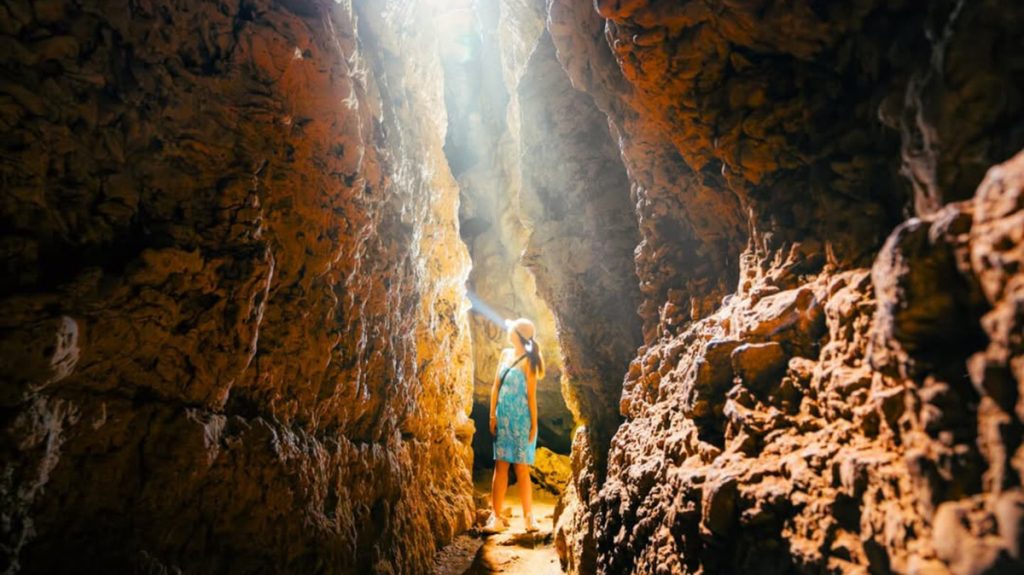
The experience inside Batu Cermin Cave unfolds in stages. Here is a step-by-step guide to what you will encounter:
The Entrance Path: Jungle Trail and Wildlife
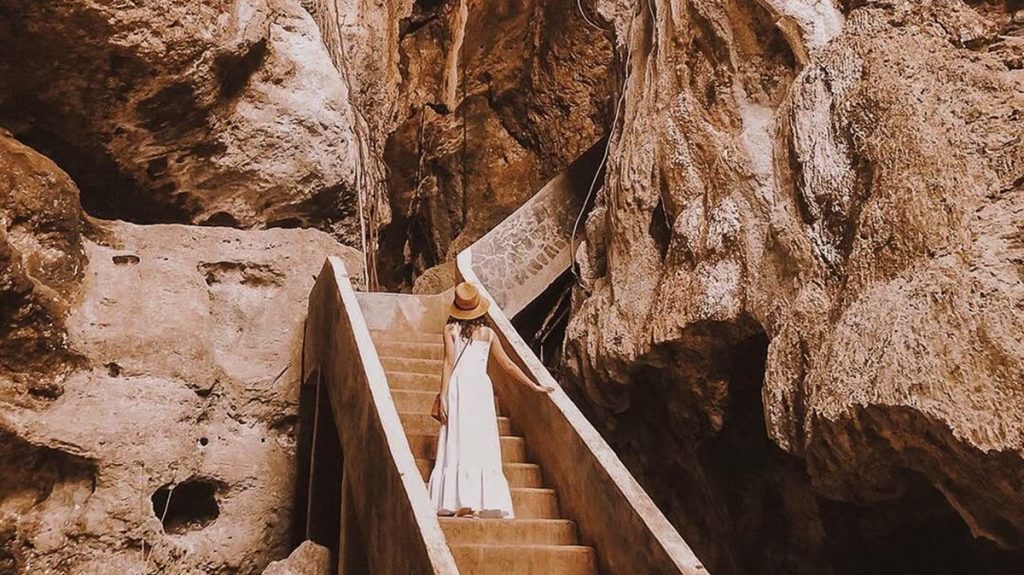
From the ticket gate — marked by a wooden ‘Welcome to Stone Mirror’ sign — a 250-metre path leads to the cave entrance. The walk takes around 10 minutes. Bamboo trees line the trail on both sides. Furthermore, long-tailed macaque monkeys and wild boars occasionally appear along the path. They are accustomed to visitors and pose no threat.
Safety Gear and Tour Briefing
Before entering the cave, guides provide helmets to all visitors. These protect your head from low-hanging stalactites and stalagmites in the narrower sections of the cave. Furthermore, each tour group is limited to a maximum of 10 people, and each session lasts approximately 30 minutes. This controlled approach helps preserve the cave environment.
In addition, guides ask visitors to use their phone torches rather than external lamps. The reason for this is practical and conservationist: the heat generated by lamps can alter the temperature of the surrounding rock formations, potentially damaging them over time. As a result, phone torches provide sufficient light while protecting the cave’s natural state.
Navigating the Narrow Passages
Inside the cave, some passages require ducking and bending. The guide leads the way and advises when to crouch. Moreover, the path through the cave is uneven in places. Therefore, wearing shoes with a good grip and moving carefully is important throughout the tour.
The Main Chamber: Fossils and Formations
After navigating the initial passages, visitors arrive at a larger chamber. The highlight here is a turtle fossil visible in the cave ceiling. Furthermore, coral reef fossils cover sections of the walls throughout the cave — living evidence of the cave’s ancient underwater origins. The stalactites and stalagmites in this section are particularly dramatic.
The Mirror Room: The Cave’s Signature Phenomenon
The tour’s centrepiece is the chamber where the cave earns its name. Sunlight enters through gaps between the rocks in the ceiling and strikes the salt-crystalline walls directly. Because the walls contain a high concentration of salt, they reflect light rather than absorbing it. As a result, the chamber floods with natural light — no torch or lamp is required.
Moreover, the reflection is so bright and clear that it genuinely resembles a mirror. This phenomenon is most vivid between 9:00 am and 12:00 pm, reinforcing the importance of visiting during that window.
The Sound Phenomenon: No Echo
One of Batu Cermin Cave’s lesser-known quirks is its complete absence of echo. Unlike most cave systems, sound does not bounce off the walls here. This is because the cave walls are composed of coral reef material. Coral reefs’ porous, cavity-filled structure absorbs sound waves rather than reflecting them — the opposite of its behaviour with light. In addition, this makes the cave uniquely quiet despite its large internal chambers.
What to Bring to Batu Cermin Cave Labuan Bajo
Preparing well before visiting Batu Cermin Cave Labuan Bajo ensures a comfortable and safe experience. Here is what to pack:
- Helmet: Provided on-site, but ensure it fits securely before entering the cave.
- Phone with torch function (fully charged): Used as your primary light source inside the cave. Bring a power bank as backup.
- Comfortable, closed-toe shoes: The cave floor is uneven in places. Sturdy footwear with good grip is essential.
- Light, breathable clothing: The cave interior is cooler than outside, but it is not cold. Light layers work well.
- Small backpack: Keep your hands free for balance in the narrow sections of the cave.
- Camera: The mirror room is exceptionally photogenic. No flash is needed during the peak light window.
- Cash (IDR): Entry and guide fees are cash only. Carry small denominations.
Travel Tips for Batu Cermin Cave Labuan Bajo
- Arrive between 9:00 am and 10:00 am to experience the mirror light effect at its most vivid.
- Hire the local guide — the extra IDR 20,000 is well spent. Guides bring the cave’s history and geology to life.
- Wear your helmet at all times inside the cave, especially in lower-ceilinged sections.
- Move slowly and deliberately in the narrow passages. The cave floor can be uneven and slippery.
- Charge your phone fully before visiting — it serves as your torch inside the cave.
- Try speaking or calling out in the mirror chamber to experience the no-echo phenomenon firsthand.
- Combine Batu Cermin Cave with Rangko Cave for a full cave-themed day itinerary from Labuan Bajo.
Ready to Explore Batu Cermin Cave Labuan Bajo?
Batu Cermin Cave Labuan Bajo is a genuinely unique destination — a place where ancient geology, fascinating history, and natural light phenomena combine into a memorable underground experience. Moreover, its central location and short journey time from town make it one of the most practical and rewarding half-day trips in the entire Labuan Bajo area.
Whether you are a first-time visitor or returning to explore Labuan Bajo more deeply, this cave deserves a place on your itinerary. For more ideas on what to explore around Labuan Bajo, visit the official Indonesia Tourism guide to Labuan Bajo.
FAQs
The cave earns its name from a remarkable natural light phenomenon. Sunlight enters through gaps in the cave ceiling and strikes walls with a high salt content. Because salt crystals reflect light rather than absorbing it, the walls act like mirrors — flooding the chamber with bright natural light. This effect is most pronounced between 9:00 am and 12:00 pm.
Each guided tour session lasts approximately 30 minutes. Furthermore, the walk from the entrance gate to the cave mouth takes around 10 minutes each way. In total, plan for around 60–75 minutes for the full experience, including the walk, tour, and time at the entrance area.
Yes — Batu Cermin Cave is generally suitable for children, provided they are comfortable in enclosed spaces and can navigate uneven terrain. However, some sections require ducking and bending. Additionally, children must wear a helmet at all times inside the cave. The 30-minute tour duration is manageable for most ages.
Advance booking is not generally required for Batu Cermin Cave. However, tour groups are limited to a maximum of 10 people per session. Therefore, arriving early in the morning reduces the chance of waiting for another group to finish. During peak season (July–September), it is worth arriving as soon as the site opens.
Batu Cermin Cave is believed to have once sat on the ocean floor. Tectonic activity over thousands of years elevated it to its current position above ground. Evidence of this origin includes coral reef fossils embedded throughout the cave walls and a turtle fossil visible in the ceiling of the main chamber. Dutch archaeologist Theodore Verhoven first documented this geological history during his research in the region.