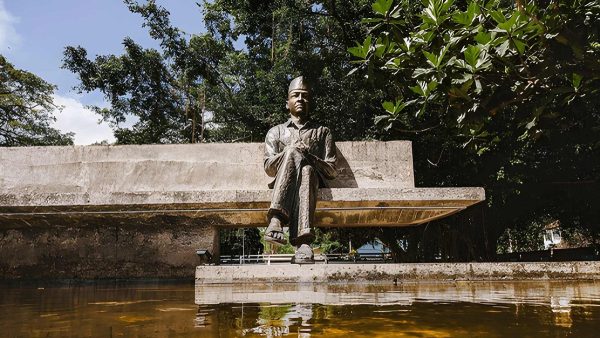
Bung Karno Contemplation Park — known in Indonesian as Taman Renungan Bung Karno — is one of the most historically significant sites in all of eastern Indonesia. Located in Ende, Flores, East Nusa Tenggara, this modest park occupies a place of extraordinary national importance: it is where Indonesia’s first president, Soekarno, spent four years in political exile and where he developed the foundational philosophy that would shape the independent Indonesian nation.
Moreover, the park sits above a bay with views of the open sea — a setting that feels quietly appropriate for a place of contemplation. Soekarno was sent here by the Dutch colonial authorities in 1934. It was under a breadfruit tree in this garden that he formulated Pancasila: the five principles that remain the philosophical foundation of the Republic of Indonesia to this day. This guide covers the history of Bung Karno Contemplation Park, what to see, and how to visit.
Quick Facts: Bung Karno Contemplation Park
Full Indonesian name: Taman Renungan Bung Karno
Location: Rukun Lima Village, South Ende District, Ende Regency, East Nusa Tenggara (NTT)
Park area: 2,700 square metres (approximately 52m x 52m)
Opening hours: 9:00 am to 5:00 pm daily
Entry fee: IDR 20,000/person (verify before visiting)
Key feature: Museum in Soekarno’s exile house + statue under the breadfruit tree
Historical period: Soekarno was exiled here from 1934 to 1938 (four years)
Special event: Pancasila Day, celebrated every 1 June
The History of Bung Karno Contemplation Park
Soekarno and the Dutch Colonial Exile
Soekarno was one of the most prominent anticolonial leaders in the Dutch East Indies. His activism and ability to mobilise public opinion made him a significant threat in the eyes of the colonial authorities. As a result, the Dutch colonial government decided to remove him from the political centre of Java and exile him to the far eastern islands of the archipelago.
In 1934, Soekarno was sent to Ende, on the island of Flores. The Dutch authorities restricted his correspondence and limited his contact with the outside world. Furthermore, they expected the isolation to diminish his influence and suppress his anticolonial activities. However, Soekarno used the years of exile to read, write, paint, study, and contemplate the future of his nation.
During his time in Ende, Soekarno stayed at the house of a local resident named Abdullah Ambuwawu, together with his wife, adopted son, and mother-in-law. He lived in Ende from 1934 to 1938, a period of four years, before being transferred to Bengkulu in Sumatra.
Learning and Reflection During Exile
The period of exile in Ende was far from wasted time. Soekarno immersed himself in intellectual and spiritual reflection. He studied Islam and deepened his understanding of religious pluralism, partly through conversations with a local pastor in Ende. In addition, he continued writing political essays, drama scripts, and letters to supporters despite the restrictions imposed by the Dutch.
Furthermore, the isolation of Ende gave Soekarno the distance needed to think clearly about what Indonesia would need after independence. It was during these years that the foundations of his most enduring philosophical contribution began to take shape.
The Birth of Pancasila in Ende
Contemplation Under the Breadfruit Tree
The most celebrated aspect of Soekarno’s time in Ende is his daily habit of sitting and thinking under a large breadfruit tree in the garden near his exile house. It was here, through sustained contemplation and intellectual effort, that he developed the philosophical framework he would later name Pancasila.
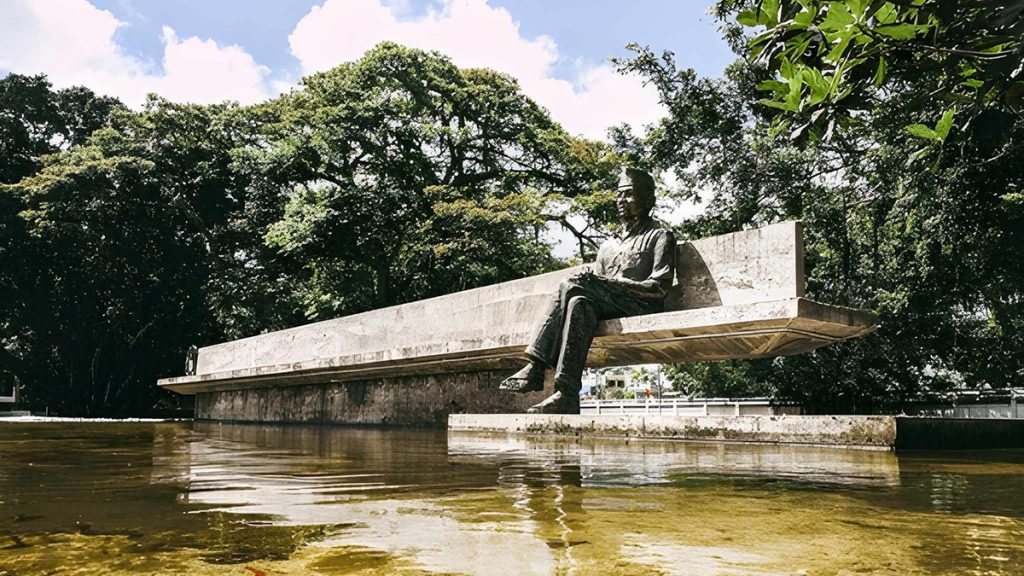
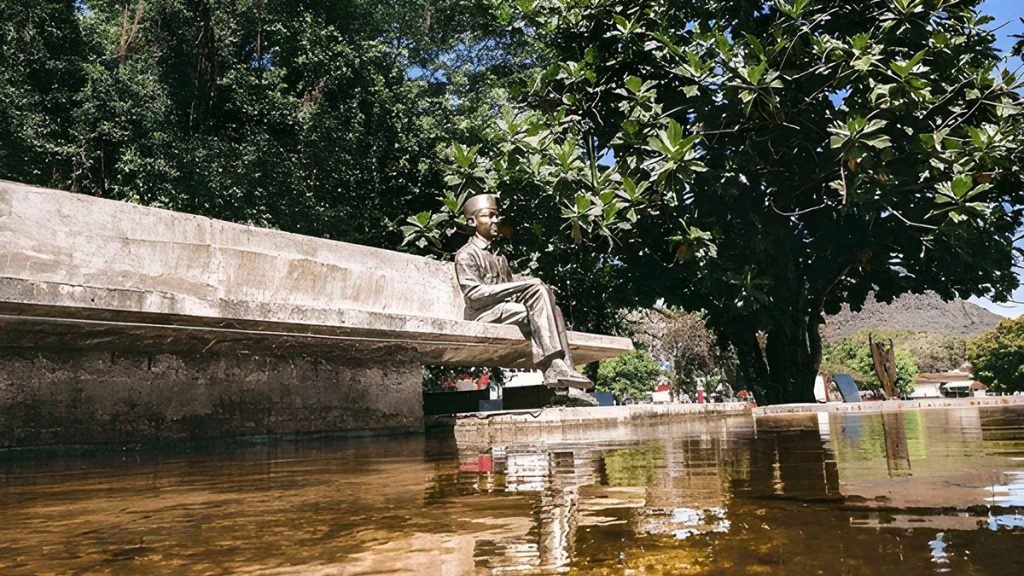
Soekarno recognised that for Indonesia to become independent and remain unified, it needed a set of shared principles that could unite people of different religions, ethnicities, and political beliefs. The breadfruit tree under which he sat became the symbolic birthplace of those principles. Today, the tree remains standing in the park, and a statue of Soekarno marks the spot where he contemplated.
What Is Pancasila?
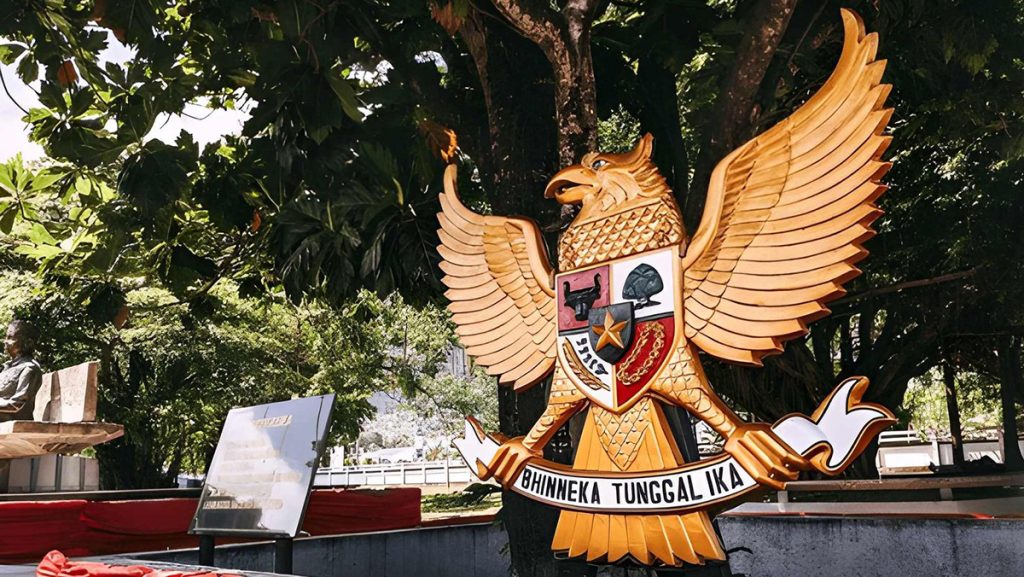
Pancasila is derived from the Sanskrit words panca (five) and sila (principles). It consists of five foundational principles that form the basis of the Indonesian state and constitution. These five principles are:
- Belief in the One Supreme God (Ketuhanan Yang Maha Esa)
- A Just and Civilised Humanity (Kemanusiaan yang Adil dan Beradab)
- The Unity of Indonesia (Persatuan Indonesia)
- Democracy led by the wisdom of deliberation among representatives (Kerakyatan yang Dipimpin oleh Hikmat Kebijaksanaan dalam Permusyawaratan/Perwakilan)
- Social Justice for all the people of Indonesia (Keadilan Sosial bagi Seluruh Rakyat Indonesia)
Furthermore, Pancasila was formally proclaimed as the basis of the Indonesian state on 1 June 1945, a date now commemorated annually as Pancasila Day. In addition, the park holds a special significance on this date each year, when ceremonies are held to honour Soekarno’s contribution to Indonesian nationhood.
What to See at Bung Karno Contemplation Park
The Museum: Soekarno’s Exile House
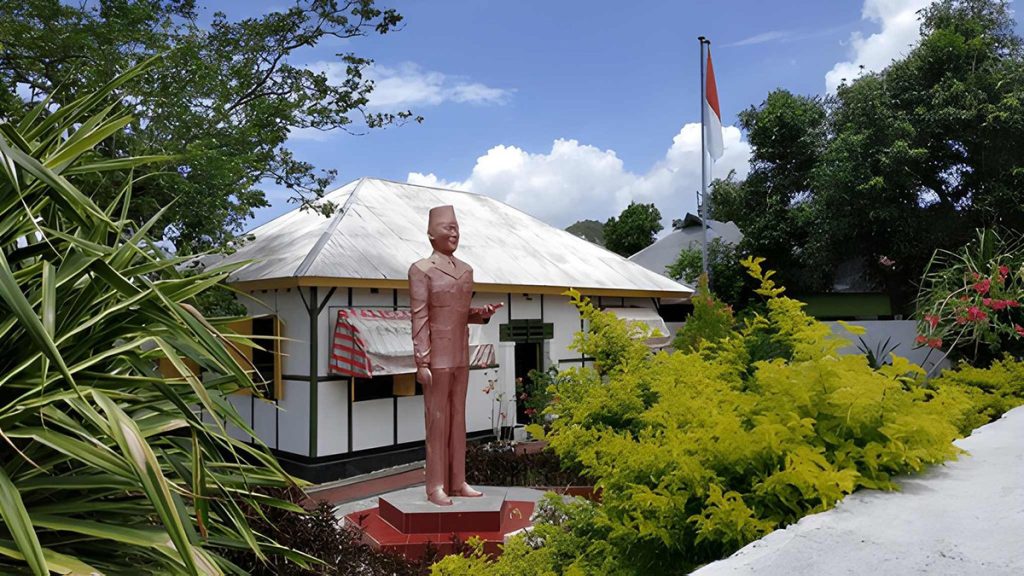
The centrepiece of the park is the museum housed inside the exile residence where Soekarno lived from 1934 to 1938. The museum is open to the public during park hours. Inside, visitors can view a collection of original photographs from Soekarno’s time in Ende, documents from his oration and writing activities, and original furniture that was present during his period of exile.
Furthermore, the museum provides important historical context for understanding Soekarno not only as Indonesia’s founding president but as a human being living under colonial restrictions. The personal scale of the exhibit makes the history feel immediate and accessible. In addition, the accompanying text explains the significance of each item on display.
The Breadfruit Tree and Soekarno Statue
Approximately 700 metres from the museum stands the famous breadfruit tree under which Soekarno contemplated and developed the principles of Pancasila. A statue of Soekarno marks the spot, depicting him in a posture of reflection beneath the tree’s canopy. This is the most photographed location within the park and carries deep symbolic weight for Indonesian visitors.
Moreover, the tree itself has become a living monument to the intellectual and spiritual effort that produced Pancasila. For visitors interested in Indonesian history and independence, standing beneath this tree is a genuinely moving experience.
The Park and Sea Views
The broader park is a pleasant space for walking and quiet reflection. It sits at the top of a bay with open views of the sea below. Furthermore, the combination of historical significance, the garden setting, and the coastal panorama makes the park a multi-layered experience that suits visitors with both historical and scenic interests.
How to Get to Bung Karno Contemplation Park
Reaching Ende
H. Hasan Aroeboesman Airport in Ende receives regular flights from Bali (via Kupang or Labuan Bajo) and from other Indonesian cities. From Soekarno-Hatta International Airport in Jakarta, travelers transit through Bali or Kupang before continuing to Ende. Furthermore, direct flights from Denpasar (Bali) to Ende are available and are the most popular route for international travelers visiting the region.
From Ende to the Park
The park is located in Rukun Lima Village, South Ende District. From central Ende, it is accessible by taxi or public bus. Two main bus terminals serve Ende city: Wolowona Terminal and Ndao Terminal. Furthermore, taxis are available from the airport and the city centre. The park is easy to reach and well-known to local drivers.
In addition, several hotels are available in Ende city near the park, making it convenient to combine the visit with other Ende attractions such as Wolotopo Traditional Village and the Ende waterfront.
Visiting Information and Practical Tips
Visiting Hours and Entry Fee
Opening hours: 9:00 am to 5:00 pm daily
Entry fee: IDR 20,000/person (rates may vary on weekends — confirm before visiting)
Special event: Pancasila Day on 1 June each year — special ceremonies are held at the park
Photography: Permitted throughout the park
Museum: Open during park hours. Photographs, documents, and original furniture on display.
Prices and hours are from the original source. Verify current rates and hours locally before visiting.
Travel Tips for Bung Karno Contemplation Park
To make the most of your visit to Bung Karno Contemplation Park, keep these practical points in mind:
- Visit the museum first to gain historical context before walking to the breadfruit tree and statue. The sequence makes the experience more meaningful.
- Plan your visit for 1 June if possible. Pancasila Day ceremonies held at the park on this date offer a rare opportunity to witness the park in a ceremonial context.
- Allow at least 1.5 to 2 hours for a thorough visit, covering the museum, the tree and statue, and the park grounds.
- Bring cash in IDR. Confirm the current entry fee before arriving, as weekend rates may differ from weekday rates.
- Combine the visit with other Ende city attractions. Wolotopo Traditional Village and the Ende waterfront are both within easy reach of the park.
- Dress respectfully. This is a site of national historical and cultural significance for Indonesian visitors, and appropriate dress shows respect for its importance.
Ready to Visit Bung Karno Contemplation Park?
Bung Karno Contemplation Park is a destination that rewards visitors who take the time to understand what happened here. The story of Soekarno’s exile, his intellectual resilience, and the birth of Pancasila beneath a breadfruit tree in Ende is one of the most remarkable chapters in Indonesian national history. Furthermore, the modest scale of the park makes the experience feel personal rather than monumental.
A visit here is a genuinely moving experience for those interested in Indonesia’s independence movement and its founding principles. For more information about the Ende region and Flores Island, visit the official Indonesia Tourism guide to Ende.
FAQs
The park marks the site where Soekarno, Indonesia’s first president, was exiled by the Dutch colonial government from 1934 to 1938. During this period of exile in Ende, Flores, he developed the philosophical principles of Pancasila — the five foundational values that became the basis of the Indonesian state and constitution. The park preserves his exile residence as a museum and marks the breadfruit tree under which he contemplated these principles with a statue.
Pancasila is the five-principle philosophical foundation of the Indonesian state, derived from the Sanskrit words for five (panca) and principles (sila). Its five principles cover belief in God, humanity, national unity, representative democracy, and social justice. Soekarno formulated these principles during his exile in Ende because he had the time and space to think deeply about what an independent Indonesia would need to hold its diverse people together. The park commemorates this period of contemplation.
The museum is housed inside the actual residence where Soekarno lived during his exile from 1934 to 1938. Exhibits include original photographs from his time in Ende, documents from his writing and oration activities during the exile period, and original furniture that was present in the house. The museum provides a personal and immediate window into Soekarno’s daily life during one of the most significant periods of his intellectual development.
The park is open daily from 9:00 am to 5:00 pm and can be visited at any time of year. However, the most meaningful time to visit is 1 June, which is commemorated as Pancasila Day throughout Indonesia. Special ceremonies are held at the park on this date each year, and visiting during this period offers a unique opportunity to experience the park in its ceremonial context.
Bung Karno Contemplation Park is located in Ende city, making it easy to combine with several other nearby attractions. Wolotopo Traditional Village is a megalithic Lio heritage site approximately 12 kilometres east of Ende. The Ende waterfront and local markets provide a glimpse of daily life in the city. For those with more time in the region, Kelimutu National Park (accessible via Moni Village) is the primary natural highlight of Ende Regency and a natural complement to a historical visit to the contemplation park.